Virginia's former-client conflict rule now has an exception for criminal records.
Amended Rule 1.9(c)(1), effective July 27, 2026, lets a lawyer use a former client's criminal history against them when it comes solely from law enforcement databases or court records. The rest of the rule did not move.
By Helena Harper, Editorial Director
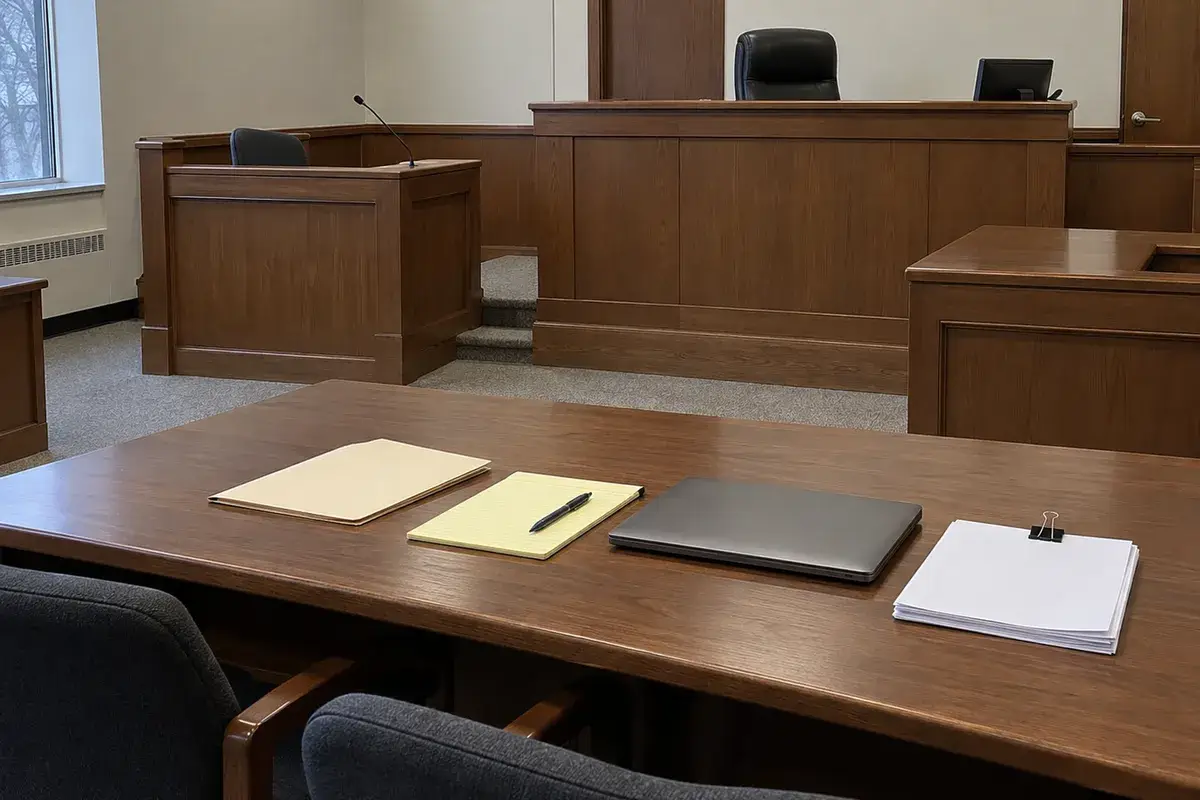
Virginia amended Rule 1.9
The Supreme Court of Virginia approved a Virginia State Bar petition on May 28, 2026, and amended Rule 1.9 of the Virginia Rules of Professional Conduct. The amendment took effect July 27, 2026.
Rule 1.9 is titled "Conflict of Interest: Former Client." It appears in Part Six, Section II of the Rules of the Supreme Court of Virginia. The amendment adds one exception to the rule's restrictions on a lawyer's use of information from a former representation.
The Virginia State Bar presented the petition to the court on March 9, 2026, through its President, K. Brett Marston, and its Executive Director, Cameron M. Rountree. The bar's Council had approved the amendment before the petition was filed.
The Council voted 46 yes, 17 no, and one abstention at its February 28, 2026 meeting.
The new exception applies only to the use of criminal history information
Before the amendment, Rule 1.9(c)(1) stated that a lawyer who formerly represented a client in a matter, or whose present or former firm formerly represented a client in a matter, could not use information relating to or gained during the representation to the former client's disadvantage. The rule made exceptions when Rule 1.6 or Rule 3.3 would permit or require the use, or when the information had become generally known.
The amendment adds another exception at the end of that provision. Use is now permitted "when the information consists solely of criminal history information that can be obtained from law enforcement databases or court records."
The word "solely" limits the exception. It applies to criminal history information, not to every fact learned during a former representation. Information the former client gave the lawyer, and facts about the prior case that do not appear in the identified record sources, are not covered by the new language.
The information also must be obtainable from law enforcement databases or court records. The text does not extend the exception to information that came only from the former representation.
The reveal restriction remains unchanged
Rule 1.9(c) contains separate restrictions on using and revealing information. Paragraph (c)(1) addresses use. Paragraph (c)(2) addresses disclosure.
The amendment added language only to (c)(1). Paragraph (c)(2) still provides that a lawyer may not reveal information relating to the representation unless Rule 1.6 or Rule 3.3 would permit or require the disclosure with respect to a client.
That distinction matters because the new exception does not amend the reveal clause. It permits the specified use of criminal history information under (c)(1). It does not create a new exception to (c)(2). The existing "generally known" exception in (c)(1) also remains.
Before publishing, the Archivar editorial desk placed the Supreme Court of Virginia's May 28, 2026 order beside the Legal Ethics Committee's March 20, 2025 redline draft and confirmed that the only underlined new text is the single criminal-history clause at the end of (c)(1). Paragraph (c)(2) reads the same in both documents.
Paragraphs (a) and (b) still set separate limits
The amendment did not change paragraph (a). A lawyer who formerly represented a client may not represent another person in the same or a substantially related matter when that person's interests are materially adverse to the former client, unless both the present and former client consent after consultation.
Paragraph (b), which addresses matters where the lawyer's former firm represented a client, also remains unchanged. The text of Rule 1.9(c) applies to a lawyer whose present or former firm represented the former client, not only to a lawyer who personally handled the earlier matter.
The criminal-history exception therefore does not alter the rule's separate limits on representation in the same or a substantially related matter. The amendment also does not address conflict analysis under other rules.
The bar proposed the change to address criminal defense conflicts
The proposal came from the Virginia State Bar's Legal Ethics Committee. The committee's draft was dated March 20, 2025. The bar published the proposal for public comment on March 27, 2025, with a May 7, 2025 deadline.
The bar said the change would reduce conflicts faced by criminal defense lawyers, including public defender offices. Under the rule before the amendment, a lawyer who learned a client's criminal history during an earlier representation faced a conflict when representing a new client if the former client was an adverse witness.
According to Virginia Lawyers Weekly's April 3, 2025 report on the proposal, the bar also noted that this information is typically provided by the prosecution to any lawyer representing the defendant, so the prior representation gives the lawyer no special advantage from it.
Criminal defense offices can use qualifying history from public records
For Virginia criminal defense lawyers and public defender offices, the amendment removes the Rule 1.9(c)(1) bar on using a former client's criminal history when the information consists solely of criminal history obtainable from law enforcement databases or court records.
The exception remains narrow. A former client's criminal history may fall within it, while statements the former client made to the lawyer do not. Facts from the earlier representation that are not available through the identified databases or court records also remain subject to the rest of (c)(1).
The unchanged reveal restriction applies separately. So does paragraph (a), including its restriction on representation in the same or a substantially related matter when the interests are materially adverse. The amendment does not resolve any other conflict question that may arise under another rule.
The Docket earlier covered a different conflict rule change in New Jersey.
Firm materials written before July 27, 2026 describe the old text
Conflict-check procedures and former-client screening notes written before July 27, 2026 describe Rule 1.9(c)(1) without the new exception.
The relevant record is the firm's history of prior representations. Archivar, which publishes The Docket, is an operating system for law firms that answers every call 24/7 in English and Spanish, runs intake, manages matters, and remembers everything the firm does. A firm's record of whom it has represented before is exactly the record a former-client conflict check runs against.
Since July 27, 2026, Virginia Rule 1.9(c)(1) has one more exception.
It covers only criminal history found in law enforcement databases or court records.
The reveal clause, the substantially related test and the former-firm rule stayed where they were.
One new clause
Rule 1.9(c)(1) now also permits use of information that "consists solely of criminal history information" from law enforcement databases or court records.
Reveal clause unchanged
Paragraph (c)(2) still bars revealing information relating to the representation except as Rule 1.6 or Rule 3.3 permits or requires.
Paragraphs (a) and (b) unchanged
Same or substantially related matters adverse to a former client still require consent from both the present and former client.
In force since July 27, 2026
Council voted 46 to 17 on February 28, 2026. The Supreme Court of Virginia approved the petition on May 28, 2026.
Archivar
The Archivar Editorial Desk
Every date, vote count, name and quoted phrase above was checked against the Supreme Court of Virginia's May 28, 2026 order and the Virginia State Bar's own notice and redline draft, and the amended rule text was checked against a second published copy. Rules are amended and ethics questions turn on their facts, so check the current rule text and the Virginia State Bar's guidance before relying on anything here. This article is for general informational purposes and is not legal advice.
Sources: Supreme Court of Virginia, Order amending Rule 1.9 of the Rules of Professional Conduct (May 28, 2026, effective July 27, 2026), and Amendments to Rules of the Supreme Court of Virginia index; Virginia State Bar, "VSB Seeks Public Comment on Amendments to Rule of Professional Conduct 1.9" (March 27, 2025) and Legal Ethics Committee draft of Rule 1.9 (March 20, 2025); Virginia Lawyer, "Highlights of the February 28 VSB Council Meeting" (April 2026); Virginia Lawyers Weekly, "Bar seeks comment on amendment to conflict of interest rule" (April 3, 2025); CourtRules.net, Virginia Rule of Professional Conduct 1.9.