California courts must now record the hearing when no court reporter comes.
A unanimous California Supreme Court held that superior courts must give civil litigants who cannot afford a private court reporter an official verbatim record on request, and must use electronic recording when no official reporter is available, despite the statute that generally bans it.
By Helena Harper, Editorial Director
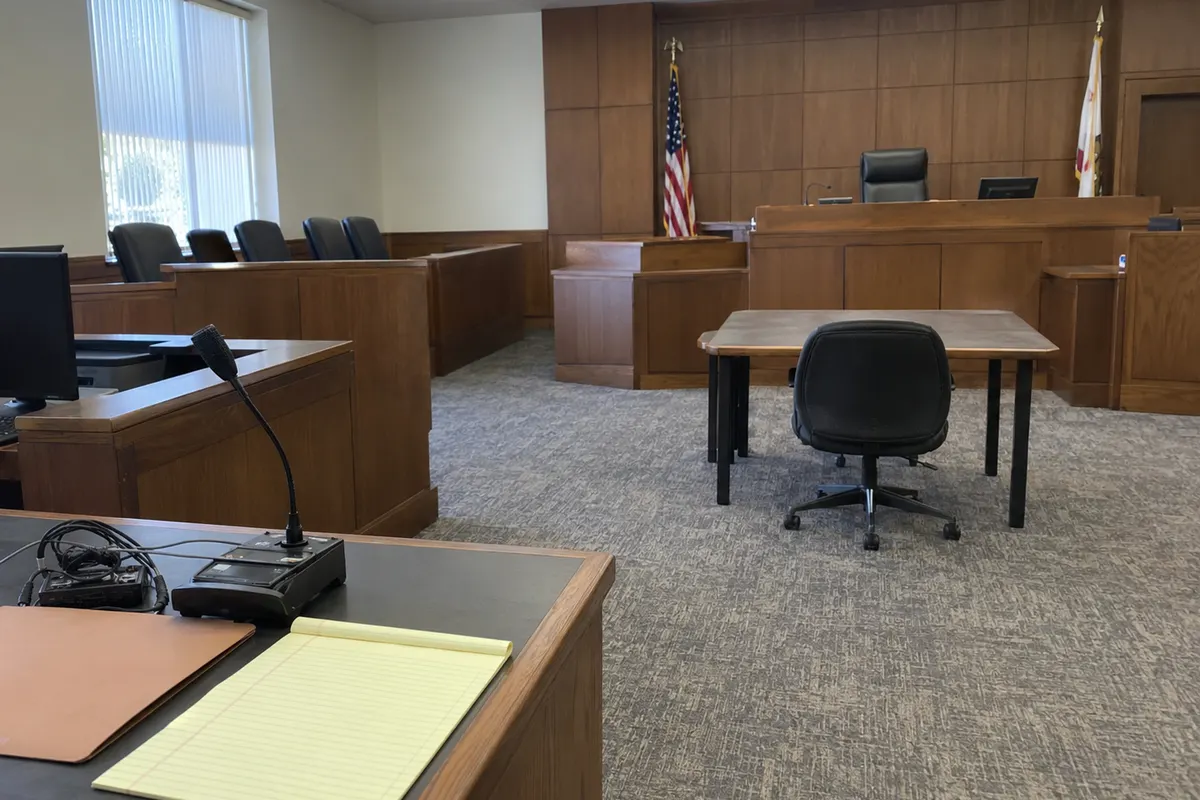
California courts must record civil proceedings when no reporter is available
On August 10, 2026, the California Supreme Court held that superior courts must provide an official verbatim record to indigent civil litigants upon request. If an official court reporter or official reporter pro tempore is unavailable, the court must use electronic recording.
The unanimous decision came in Family Violence Appellate Project v. Superior Court of Contra Costa County, California Supreme Court No. S288176. Chief Justice Patricia Guerrero wrote the opinion. Justices Corrigan, Liu, Kruger, Groban, Evans, and Lie concurred. Justice Lie is a Sixth District Court of Appeal justice assigned by the Chief Justice.
The Court directed the four respondent courts, Los Angeles, Santa Clara, Contra Costa, and San Diego counties, to provide meaningful access to an official verbatim record in all cases. The holding is a published California Supreme Court decision and binds all California trial courts.
Before publishing, the Archivar editorial desk read the full 35-page opinion rather than relying on press summaries. Early coverage gave three different dates for the ruling, August 10, 11, and 13. The opinion's filing date is August 10, 2026, which is the date used here.
The ruling creates an exception to section 69957
Government Code section 69957 permits electronic recording in limited civil, misdemeanor, and infraction cases when an official reporter is unavailable. It generally prohibits electronic recording as the official record in other cases, including unlimited civil cases.
The Supreme Court held that section 69957 does not specifically forbid recording when recording is needed to give an indigent litigant meaningful access to justice. Under the in forma pauperis doctrine, courts must imply an exception to the statute.
The result depends on whether a reporter can be provided. If the court can provide an official reporter, section 69957 still bars electronic recording. If the court cannot provide a reporter, the court must record the proceeding electronically. The opinion says courts "have no discretion in this regard."
The Court did not decide the petitioners' due process, equal protection, or separation of powers arguments. It noted serious doubts about whether the Legislature could curtail the courts' inherent power, but left that question unresolved.
The duty reaches more than fundamental-rights cases
The decision arose from an original writ of mandate proceeding filed directly in the Supreme Court in December 2024 by Family Violence Appellate Project and Bay Area Legal Aid.
The California Attorney General filed an amicus brief supporting the petitioners at the Court's request. Court reporter organizations, including the California Court Reporters Association and SEIU California State Council, filed briefs on the other side. They argued that the courts could meet their obligations by hiring more reporters.
Three respondent courts had issued general orders before the Supreme Court ruled. Los Angeles issued its order in September 2024, Santa Clara in November 2024, and Contra Costa in December 2024. Those orders allowed electronic recording only in proceedings involving fundamental rights or liberty interests, and only after the judge made six findings. San Diego had issued no similar order.
The Supreme Court said those orders "fall short." The duty is not limited to cases involving fundamental rights or liberty interests. The disposition paragraph directs the courts to provide a record "in all cases," the phrase that reaches beyond the limit used in the earlier orders.
The affected matters include domestic violence and civil harassment restraining orders, child custody and support, marital dissolution, debt collection, employment and housing discrimination, and probate conservatorships and guardianships.
Lack of reporters had left litigants with two poor choices
The Court relied on its 2018 decision in Jameson v. Desta, 5 Cal.5th 594. Jameson held that when a superior court does not provide official reporters in civil cases but allows parties to pay for private reporters, the court must make an exception for fee waiver recipients so they can obtain a verbatim record.
The new opinion says that guarantee "has proven illusory" because courts often do not have reporters to send.
When no reporter appeared, an indigent litigant could accept a continuance, sometimes several and sometimes lasting months, or proceed without a verbatim record. Declarations from legal aid lawyers described clients choosing to proceed without a record. That choice makes appellate review of alleged errors much harder.
The scale was substantial. The Los Angeles County Superior Court reported more than 332,000 hearings in 2023 with no verbatim record. Santa Clara County reported more than 56,000 such hearings that year. A California Access to Justice Commission issue paper dated November 14, 2024, reported that more than one million hearings and trials in unlimited civil, family, and probate cases had no means to create an official transcript during the year ending March 31, 2024.
The covered group is broader than fee waiver recipients
The Court did not adopt an absolute standard of indigency. Footnote 3 states that the covered group includes any litigant who cannot afford to hire a private court reporter. That may include people who can pay routine filing fees.
Courts are to assess ability to pay flexibly. The Court has previously rejected the idea that a formal in forma pauperis application is required before relief can be granted.
The practical trigger is a request for a record together with a showing that the litigant cannot afford a private reporter. A fee waiver remains the clearest route for showing inability to pay, but the opinion does not make a formal fee waiver application a prerequisite.
The holding does not affect parties who can afford a private reporter. Section 69957 continues to bar electronic recording when the court can provide a reporter.
Electronic recordings may become the appellate record
The Court rejected settled and agreed statements as a systematic substitute for an official verbatim record. Those statements, under California Rules of Court, rule 8.137, serve important purposes, but the opinion, repeating Jameson, describes the process as cumbersome.
Court reporter organizations raised concerns that recordings may be less accurate. The Court declined to weigh the comparative risks. It stated: "a verbatim record created by electronic recording is better than no record at all."
The opinion said accuracy concerns can be addressed through standardized procedures. It pointed to California Rules of Court, rules 2.952 and 2.954, which set standards for electronic recording equipment and operation.
The opinion did not define exhaustively what makes a reporter "unavailable." The test is whether the litigant would otherwise be deprived of equal access to justice.
The decision also leaves questions for later resolution. It does not settle who pays for transcribing a recording for an indigent party, how extensively a court must search for a live reporter before recording, or what happens when a civil courtroom lacks recording equipment. The opinion states that a significant majority of courtrooms in the four respondent courts already have recording equipment installed.
For a family law or legal aid practice, the date of a record request and whether a reporter or recording was used at each hearing are details that belong on the matter record. Archivar, which publishes The Docket, is an operating system for law firms: it answers every call 24/7 in English and Spanish, runs intake, manages matters, and remembers everything the firm does.
The ruling binds California trial courts. Implementation details, including equipment, transcription costs, and what counts as unavailable, remain for the trial courts to address.
A statute written to keep recorders out of most civil courtrooms now yields when no reporter comes.
The 2018 promise of a record for litigants who cannot pay finally has a fallback.
The request is still what starts it.
A duty, not an option
Courts must imply an exception to Government Code section 69957 and record. The opinion says they have no discretion.
All civil cases
Not only fundamental-rights matters. The earlier Los Angeles, Santa Clara and Contra Costa orders fell short.
Broader than fee waivers
Anyone who cannot afford a private reporter may qualify. No formal in forma pauperis application is required.
Triggered by a request
The duty runs upon request. Parties who can pay for a reporter are unaffected, and section 69957 still applies to them.
Archivar
The Archivar Editorial Desk
Every date, vote, holding, statistic and quotation above was checked against the full text of the California Supreme Court's slip opinion in No. S288176, including its disposition and footnotes, and corroborated against independent press coverage of the ruling. Local court practice for record requests may vary, so confirm the procedure in the relevant superior court before relying on anything here. This article is general information, not legal advice.
Sources: Family Violence Appellate Project v. Superior Court of Contra Costa County, California Supreme Court No. S288176 (opinion filed August 10, 2026); Jameson v. Desta (2018) 5 Cal.5th 594; California Government Code section 69957; California Rules of Court, rules 2.952, 2.954 and 8.137; California Access to Justice Commission, Issue Paper on Access to the Record of California Trial Court Proceedings (November 14, 2024), as cited in the opinion; CalMatters, coverage of the ruling (August 2026); KALW, coverage of the ruling (August 13, 2026); Bloomberg Law, coverage of the ruling (August 2026).