A flooded mine in 1860 still decides who pays when blasting cracks a foundation.
A mill reservoir broke into old coal shafts and drowned the colliery next door. The 1868 judgment that followed, Rylands v. Fletcher, is still where U.S. courts start when they impose liability without negligence for blasting and other abnormally dangerous activities.
By Nathaniel Cross, Staff Writer
On 11 December 1860, shortly after it was first filled, a reservoir flooded a neighboring mine. The water came through old coal shafts and passages that contractors had found beneath the reservoir site and failed to block. The damage was assessed at 937 pounds.
The reservoir that produced Rylands v. Fletcher
John Rylands and Jehu Horrocks hired contractors to build the reservoir on their Lancashire land. It was intended to supply Ainsworth Mill. Rylands took no active role in construction and had hired competent engineers and contractors.
The contractors discovered old coal shafts and passages under the land. The spaces were loosely filled with soil and debris. They connected with the adjoining mine operated by Thomas Fletcher. The contractors did not block them.
After the reservoir was first filled, its water broke through the old shafts and flooded Fletcher's Red House Colliery. An arbitrator found negligence by the contractors, but no negligence by Rylands himself.
The case first went to the Court of Exchequer. In 1865, Chief Baron Pollock and Baron Martin held that the defendants were not liable without negligence. Baron Bramwell dissented.
The Court of Exchequer Chamber reversed in 1866. Justice Blackburn stated that a person who brings onto land and keeps there something likely to cause harm if it escapes "must keep it in at his peril." The person is prima facie answerable for damage that naturally follows the escape. The citation was Fletcher v. Rylands, (1866) L.R. 1 Ex. 265.
The House of Lords affirmed the judgment on 17 July 1868 in Rylands v. Fletcher, (1868) L.R. 3 H.L. 330. Only Lord Cairns and Lord Cranworth sat. Lord Cairns added the qualification that the rule applied to a "non-natural use" of land.
In checking this piece, the Archivar editorial desk read the Exchequer Chamber and House of Lords reports side by side. The famous "at his peril" sentence comes from Justice Blackburn's 1866 opinion, not the 1868 House of Lords judgment that gives the case its name. The Lords' own contribution was the "non-natural use" qualification.
U.S. courts split before the Restatements supplied a test
American courts did not adopt one uniform rule. In 1873, the New York Court of Appeals rejected the rule inLosee v. Buchanan, as did the New Hampshire court in Brown v. Collins. Massachusetts adopted it in Ball v. Nye, and Minnesota adopted it in Cahill v. Eastman.
The first Restatement of Torts framed strict liability around "ultrahazardous activities." The Restatement (Second) of Torts, sections 519 and 520, recast the doctrine as liability for "abnormally dangerous activities."
Section 519 states that a person carrying on an abnormally dangerous activity is liable for harm to another's person, land, or chattels resulting from the activity, even when that person exercised the utmost care to prevent the harm. The liability is limited to the kind of harm whose possibility makes the activity abnormally dangerous.
Section 520 identifies six factors. They are the degree of risk, the likelihood that the harm will be great, whether reasonable care can eliminate the risk, whether the activity is a matter of common usage, whether the activity is appropriate for the place, and whether its value to the community is outweighed by its dangerous attributes. None is decisive alone.
The Restatement (Third) of Torts: Liability for Physical and Emotional Harm, section 20, narrows the test to two parts. The activity must create a foreseeable and highly significant risk of physical harm even when all actors use reasonable care. It also must not be an activity of common usage.
Dyer moved Maine blasting claims from negligence to classification
The Supreme Judicial Court of Maine decided Dyer v. Maine Drilling & Blasting, Inc., 2009 ME 126, 984 A.2d 210, on 17 December 2009. The case involved a family home in Prospect, Maine, owned by Vera Dyer and her sons. The house was more than seventy years old.
Between October 2004 and August 2005, Maine Drilling & Blasting conducted more than 100 blasts for the Waldo-Hancock Bridge replacement project. The closest blast was about 100 feet from the house.
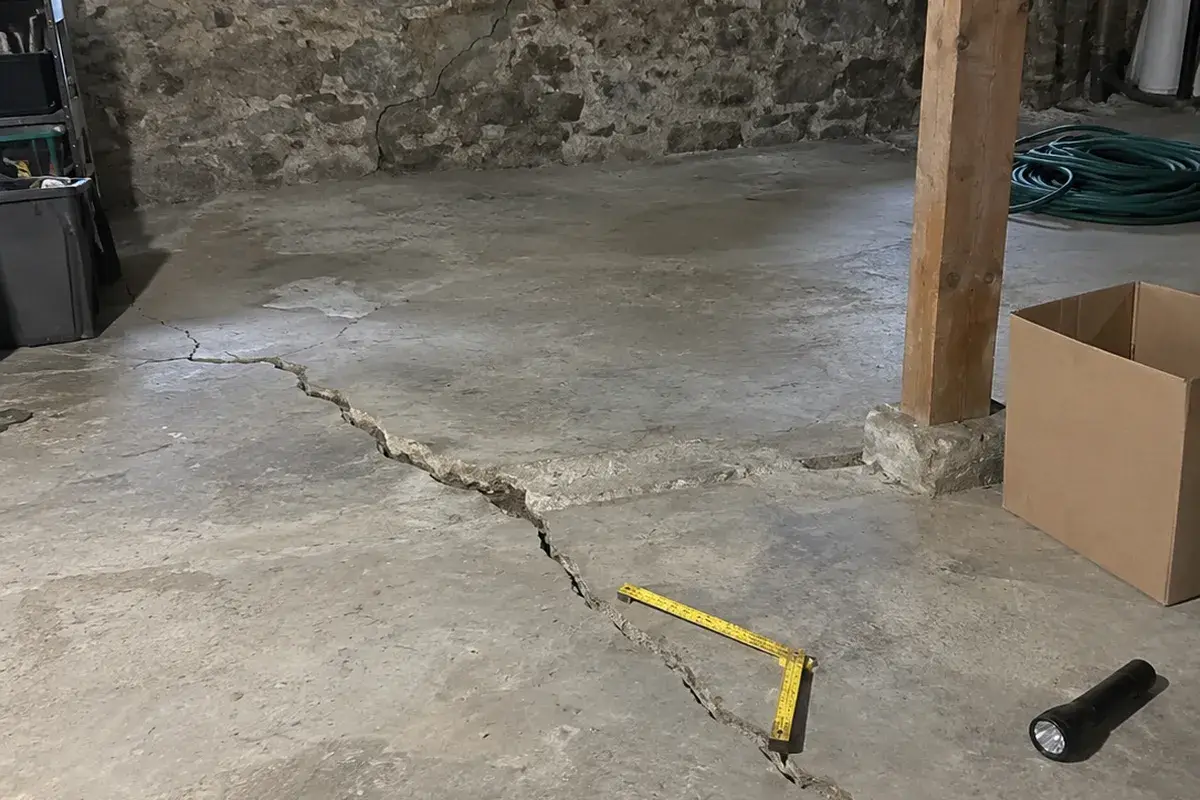
In spring 2005, the family found a dropped basement floor, a sagging support beam, and new or widened cracks in the basement and garage floors. The trial court granted summary judgment for the blasting company.
The Maine court vacated that judgment. It adopted strict liability for abnormally dangerous activities under Restatement (Second) sections 519 and 520. It also expressly overruled Reynolds v. W.H. Hinman Co., a 1950 decision that had required proof of negligence in blasting cases.
The court traced the doctrine to Rylands v. Fletcher and noted that at least 41 states had adopted some form of strict liability for blasting. But strict liability did not resolve the case. The Dyer plaintiffs still had to prove that the blasting caused the damage.
Classification decides whether carelessness matters
The modern question is whether the court classifies the activity as abnormally dangerous. If it does, the plaintiff need not prove that the defendant acted carelessly. The defendant's use of the utmost care does not defeat liability under section 519.
The fight then moves to classification and causation. A court applies the relevant Restatement factors. Blasting is the classic example, but the classification does not follow merely because an activity involves a dangerous substance or can cause serious damage.
Indiana Harbor Belt Railroad Co. v. American Cyanamid Co., 916 F.2d 1174 (7th Cir. 1990), illustrates that distinction. Judge Richard Posner discussed Rylands and declined to impose strict liability on a shipper after a rail tank car carrying acrylonitrile leaked in a Chicago switching yard. The court focused on the activity, transportation, rather than only on the hazardous nature of the chemical. It found that reasonable care could control the risk.
The scope of liability also matters. Section 519 limits liability to the kind of harm that makes the activity abnormally dangerous. Dyer separately confirms that causation remains a required showing. A classification ruling does not establish that the activity produced the plaintiff's injury or property damage.
Spill cases show how the rule reaches beyond blasting
New Jersey applied the doctrine to toxic waste in State of New Jersey, Department of Environmental Protection v. Ventron Corp., 94 N.J. 473 (1983). The state's high court held a landowner strictly liable for harm caused by toxic wastes stored on or escaping from its property. The case involved mercury from a processing plant reaching Berry's Creek, and the court treated the disposal as an abnormally dangerous activity.
The result differs from the transportation analysis in Indiana Harbor. There, the court declined to impose strict liability because reasonable care could manage the risk of the activity. In Ventron, the court treated the storage and disposal of toxic waste as the relevant activity.
The forum's law controls. The Restatement (Second) and Restatement (Third) use different formulations, and states have taken different positions on the doctrine. England and Australia also diverged from the American approach.
In England, Cambridge Water Co. v. Eastern Counties Leather plc, [1994] 2 AC 264, required the type of damage to be foreseeable. Transco plc v. Stockport Metropolitan Borough Council, [2003] UKHL 61, reaffirmed the rule but confined it to escapes of something dangerous and out of the ordinary. A leaking ordinary water pipe did not qualify.
Australia's High Court took a different route in Burnie Port Authority v. General Jones Pty Ltd(1994). It absorbed the rule into ordinary negligence.
The first intake details can bear on causation
Archivar, which publishes The Docket, is an operating system for law firms that answers every call 24/7 in English and Spanish, runs intake, manages matters, and remembers everything the firm does. In a case like Dyer, the details a homeowner gives on the first call, including how close the work was, when blasting started, and when the cracks appeared, are the starting record on causation. Recording them at intake keeps them with the matter.
For a present-day blasting or spill claim, identify the forum's rule before framing the elements. Then separate the classification question from causation. The 1860 reservoir in Lancashire supplies the doctrine, but the present case turns on the activity, the kind of harm, and proof that the activity caused it.
A mill owner who did nothing careless still paid for the flooded mine.
By the Maine court's 2009 count, at least 41 states now apply some form of that idea to blasting.
Whether it reaches a given activity is the question the forum's own law decides.
The 1866 to 1868 rule
Whoever brings onto land something likely to do mischief if it escapes keeps it in at his peril, limited by the Lords to a non-natural use of land.
The American test
Restatement (Second) sections 519 and 520 weigh six factors. The Restatement (Third), section 20, asks about highly significant risk and common usage.
Not every hazard qualifies
Indiana Harbor Belt (7th Cir. 1990) refused strict liability for shipping a toxic chemical whose risk reasonable care could control.
What it decides now
Whether care is a defense at all. Once an activity is classified, the case turns on causation and the kind of harm, as Dyer (Maine, 2009) shows.
Archivar
The Archivar Editorial Desk
Every case citation, date, holding and quotation above was checked against the reported decisions and the Restatement text, with each point confirmed in at least two independent sources. Whether an activity is abnormally dangerous, and which Restatement test applies, varies by jurisdiction, so confirm the current law where a case is pending before relying on anything here. This article is for general informational purposes and is not legal advice.
Sources: Rylands v. Fletcher (1868) L.R. 3 H.L. 330; Fletcher v. Rylands (1866) L.R. 1 Ex. 265; Dyer v. Maine Drilling & Blasting, Inc., 2009 ME 126, 984 A.2d 210; American Law Institute, Restatement (Second) of Torts sections 519 and 520; American Law Institute, Restatement (Third) of Torts: Liability for Physical and Emotional Harm, section 20; Indiana Harbor Belt R.R. Co. v. American Cyanamid Co., 916 F.2d 1174 (7th Cir. 1990); State, Dep't of Environmental Protection v. Ventron Corp., 94 N.J. 473 (1983); Cambridge Water Co. v. Eastern Counties Leather plc [1994] 2 AC 264; Transco plc v. Stockport Metropolitan Borough Council [2003] UKHL 61; Burnie Port Authority v. General Jones Pty Ltd (1994) 179 CLR 520; Cornell Law School Legal Information Institute, Wex: abnormally dangerous activity.