Colorado just rewrote the ethics rule for one-visit legal clinics.
Amended Colo. RPC 6.5 takes effect October 1, 2026. Informed consent to limited scope moves into the rule itself, a program's own intake can satisfy it, and fee, file and termination duties now switch on only under stated conditions.
By Nathaniel Cross, Staff Writer
Colorado's revised Rule 6.5 takes effect October 1
The Colorado Supreme Court amended Colorado Rule of Professional Conduct 6.5 on September 10, 2026. The change takes effect October 1 under Rule Change 2026(14), signed "By the Court" by William W. Hood, III, Justice.
Rule 6.5 covers lawyers who provide short-term limited legal services through a nonprofit or court-sponsored program, with no expectation that either the lawyer or client will continue the representation. The rule names legal-advice hotlines, advice-only clinics, and pro se counseling programs as examples.
The rule's central conflict standard remains. A participating lawyer is subject to Rules 1.7 and 1.9(a) only when the lawyer knows the representation involves a conflict. Rule 1.10 applies only when the lawyer knows another lawyer in the firm is disqualified under Rule 1.7 or 1.9(a). Paragraph (b), which makes Rule 1.10 otherwise inapplicable, remains.
Confidentiality and informed consent now appear in the rule text
New opening language in paragraph (a) says the lawyer must comply with the Rules of Professional Conduct, including Rule 1.6 and Rule 1.9(c), except as Rule 6.5 provides otherwise.
Rule 1.6 governs confidentiality. Rule 1.9(c) governs the use or disclosure of information relating to a former client. Those obligations previously appeared in Comment [2], rather than in the text of the rule.
New paragraph (c) states that a lawyer providing short-term limited services must secure the client's informed consent to the limited scope under Rule 1.2(c). The revised Comment [2] adds that Rule 1.2(c) does not require that consent to be written or signed.
Rule 1.2(c) still requires the limited scope to be reasonable under the circumstances. A program may obtain the client's informed consent before the client meets a participating lawyer. If participation depends on giving that consent, a lawyer "may rely on that program's communications and procedures" to satisfy Rule 1.2(c).
Four duties now depend on what the lawyer or program actually does
Rule 6.5 adds four numbered exceptions to paragraph (a).
First, Rules 1.5 and 1.15A through 1.15E apply only if the lawyer or sponsoring program collects fees for lawyer services from participating clients. Those provisions address fees, trust accounts, and client property.
Second, the termination provisions in Rule 1.16 apply only if the representation continues beyond the short-term services defined by the program's terms and conditions.
Third, Rule 1.16(d), which concerns surrendering papers and property to which the client is entitled, applies only if the lawyer collects and retains papers or property from participating clients.
Fourth, Rule 1.16A, Colorado's client-file retention rule, applies only if the lawyer creates a client file. The amended rule states that program administrative information is not part of a client's file for purposes of Rule 1.16A.
The comments describe a consultation that can end after one contact
Comment [1] now says that, in many programs, the representation may end under the program's terms after a single meeting, phone call, or other interactive communication. It also says these programs typically do not charge the people they serve, and typically do not collect and retain money, documents, or property from them.
The revised Comment [2] replaces an earlier statement about what to do when short-term limited representation would not be reasonable. The earlier comment said the lawyer could give advice but also had to advise the client of the need for further assistance of counsel. The new comment instead focuses on the circumstances of informed consent, the reasonableness requirement in Rule 1.2(c), and the program's role in obtaining consent.
Before this piece was published, the desk read the court's redlined order line by line against the clean copy attached to it. Two things stood out. The sentence requiring informed consent to the limited scope was not dropped. It was moved from the old Comment [2] into the rule as new paragraph (c). And most of the pages in the order are the model policy, not the rule itself.
The model policy gives programs choices, not a new mandate
The court adopted a recommended model policy in the same order. The committee minutes say a clinic is not required to adopt it. Bracketed language is left for each program to complete.
The policy addresses the scope of services, conflicts, fees, informed consent, professional liability insurance, confidentiality, advice to multiple clients with identical facts, client documents, and in-person solicitation. It also addresses Colorado licensed legal paraprofessionals and Colo. LLP RPC 6.5. The order amended Colo. RPC 6.5, not the LLP rules themselves.
Under the policy's conflicts section, volunteers are not expected to run conflict checks. They are expected to consider their actual knowledge of their own clients and their firm's clients and matters. If a volunteer has actual knowledge of a Rule 1.7 or 1.9(a) conflict, the volunteer must not provide services.
Programs can choose between two approaches to documenting informed consent. Under Option 1, the program documents consent through a signature on a check-in form, a contemporaneous staff or volunteer note, or a web request form that includes the consent. Under Option 2, the program does not document consent, although volunteers remain free to do so.
Document retention and multiple-client advice depend on program choices
The policy's default approach is that the program does not retain client documents after the consultation. Volunteers must not offer to keep those documents. The policy also offers an alternative that permits retention in defined circumstances.
Two people with materially identical facts may meet the same volunteer when there is no significant risk of material limitation under Rule 1.7. The policy gives two roommates with the same landlord problem as its example. Otherwise, the program assigns each client a separate volunteer, or, if the conflict is waivable, the volunteer confirms the waiver in writing.
The policy also requires compliance with Colo. RPC 7.3, the solicitation rule (The Docket covered New York's rewrite of its advertising and solicitation rules separately). If a lawyer offers services that are not limited services covered by Rule 6.5, the rule's exceptions do not apply. The policy concerns Rule 6.5 clinics, not unbundled services in other settings.
The committee record behind the change
The Standing Committee on the Rules of Professional Conduct considered the revisions on January 23, 2026. The minutes say the proposal addressed gaps in Rule 6.5 and sought to relieve lawyers of some informed-consent obligations when the clinic already handles that communication.
The minutes also say a clinic lawyer is likely not collecting papers or financial information, making file-retention and file-surrender rules a poor fit in that setting. Sarah Lipka of Colorado Legal Services supported the revisions, saying they would provide clarity for clinic operators and volunteers. She also said most clinic participants have family law issues and that the model policy should not open the door to solicitation under Rule 7.3.
Archivar, which publishes The Docket, is an operating system for a law firm: it answers every call around the clock in English and Spanish, runs intake, manages matters, and remembers everything the firm does. Rule 6.5's conflicts test turns on what a volunteer actually knows about the firm's clients and matters, which makes the firm's records part of that question.
What changes for a Colorado clinic volunteer on October 1
From October 1, a Colorado clinic volunteer should read the program's defined services and intake terms before providing advice. Confirm whether the program makes participation contingent on informed consent. Do not assume that a short consultation avoids every Rule 1.16 duty. If you collect fees, retain papers, create a client file, or continue the representation beyond the program's stated services, apply the corresponding rule. For conflicts, consider your actual knowledge of both your own clients and your firm's clients and matters.
The consent requirement did not go away. It moved from the comment into the rule.
What a volunteer owes now depends on what the volunteer does: collect a fee, keep a paper, open a file, stay on.
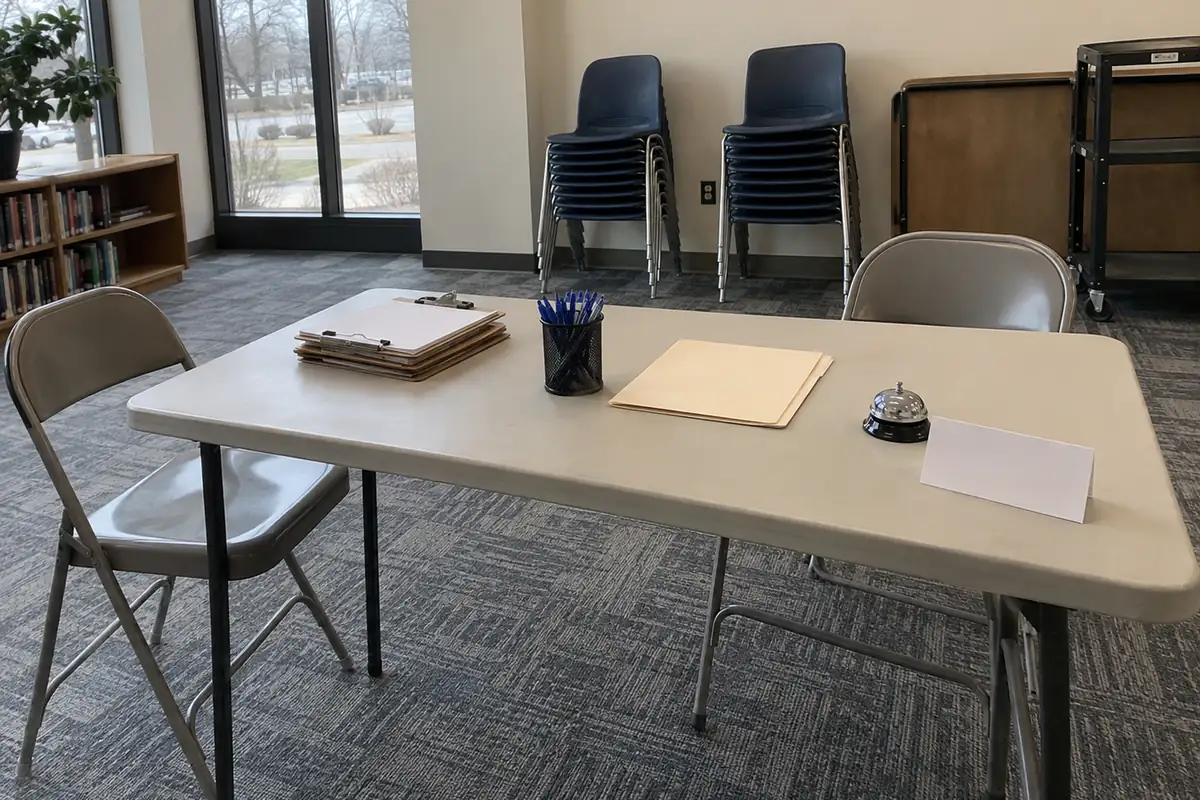
One conversation at a folding table can still end the representation. The rule now says so.
Consent is now black-letter
New paragraph (c) requires informed consent to the limited scope under Rule 1.2(c). A lawyer may rely on the program's own procedures if participation is contingent on consent.
Four conditional duties
Fee and trust rules, Rule 1.16 termination, Rule 1.16(d) surrender and Rule 1.16A file retention each apply only if fees are collected, the work continues, papers are kept, or a file is opened.
Conflicts stay knowledge-based
Rules 1.7, 1.9(a) and 1.10 still apply only on actual knowledge. The model policy adds that knowledge of the firm's own clients and matters counts.
A template, not a mandate
The model policy adopted in the same order offers options on consent records, insurance and document retention. The committee minutes say clinics are not required to adopt it.
Archivar
The Archivar Editorial Desk
Every rule number, date, name and quoted phrase above was read in the Colorado Supreme Court's own order and the Standing Committee's approved minutes, and the adoption and effective dates were cross-checked against the Office of Attorney Regulation Counsel's September 2026 update. This describes Colorado's Rules of Professional Conduct only. Rules are amended, so check the current text of any rule named here before relying on it. This article is for general informational purposes and is not legal advice.
Sources: Colorado Supreme Court, Rule Change 2026(14), Colorado Rules of Professional Conduct, Rule 6.5, amended and adopted en banc September 10, 2026, effective October 1, 2026, including the redlined and clean rule and comments and the model policy "Navigating Limited Legal Services in Colorado"; Colorado Supreme Court Standing Committee on the Colorado Rules of Professional Conduct, approved minutes of the meeting of January 23, 2026, and agenda for the meeting of April 24, 2026; Colorado Office of Attorney Regulation Counsel, "OARC Update September 2026"; The Docket, "New York just rewrote the rules for lawyer advertising and solicitation."